




Press Release
Two different surveys done a few years ago highlighted the reality of caste-based discrimination that SC/ST students face.
The IIT Bombay (IIT-B) administration, which is in the eye of a storm after a Scheduled Caste (SC) student named Sahil Wakode died by suicide on September 18, has denied that there is caste discrimination on its campus, but in a survey conducted a few years ago several students belonging to the SC or Scheduled Tribe (ST) categories shared their experiences of discrimination on campus and even in class.
IIT-B’s SC/ST Students’ Cell had conducted a detailed survey of SC and ST students in February 2022, in which a total of 388 students participated. Out of these, a total of 77 students had shared their experience in detail of how they faced caste-based discrimination on campus. The survey results had come out before the suicide of Darshan Solanki, a first-year B. Tech student, on February 12, 2023.
The survey showed that 37.1 per cent of the students were asked their entrance exam ranks, which was an attempt to know the student’s identity. Some 26 per cent of the students said that they were asked their surname with the intention of knowing their caste. Nearly 71 per cent of the students said that asking their surnames or ranks was an indicator of trying to ascertain their caste. Meanwhile, 21.5 per cent of the students said that they were afraid to talk about caste discrimination for fear of backlash from students or faculty members.
Also, 25.5 per cent of the students said that they were not sure about answering questions on caste discrimination and remained silent. The survey also showed that 29.4 per cent of the students were not comfortable discussing their caste identity while 33 per cent would discuss it with only “close friends”. The friendship with “close friends” was, most of the time, based on “similar social background”.
Some 15 per cent of the respondents said they faced mental health issues after facing discrimination on campus.
Also, in an informal survey that the cell had conducted with students and alumni, totalling 60, 93 per cent of the respondents said that they faced caste discrimination but did not report the incidents to the cell.
The survey findings were the basis for some of the measures taken by the IIT-B administration against caste discrimination. However, several students had then alleged that these efforts were inadequate and were conducted for the sake of it.
APPSC’s efforts
Ambedkar Phule Periyar Study Circle (APPSC), a student forum of IIT-B, has been consistently raising the issues of caste discrimination. This forum was instrumental in setting up the SC/ST Cell. The long battle that APPSC fought bore fruit after eight years when the IIT-B administration set up an SC/ST committee.
Before the 2023 survey by the SC/ST Cell, a smaller survey was conducted by The Insight, an official publication of IIT-B, in 2021. This survey showed that 37 per cent of general category (GC) students believed that asking surnames was not casteist. It also showed that 26 per cent of GC students wanted a hostel room-mate from their own category. Also, for 42 per cent of the GC students, being anti-reservation was not an indication of casteism.
The survey also found that 90 per cent of the GC students surveryed had seen someone using a casteist slur, and 15 per cent of them had themselves done it. Also, 80 per cent had witnessed someone using casteist jokes while 22.6 per cent said that they too had made jokes on caste lines. The survey found that 42 per cent of the GC students were comfortable with openly talking about their caste.
These two different surveys at two different times clearly show that caste was an important factor in communication and on the minds of several students.

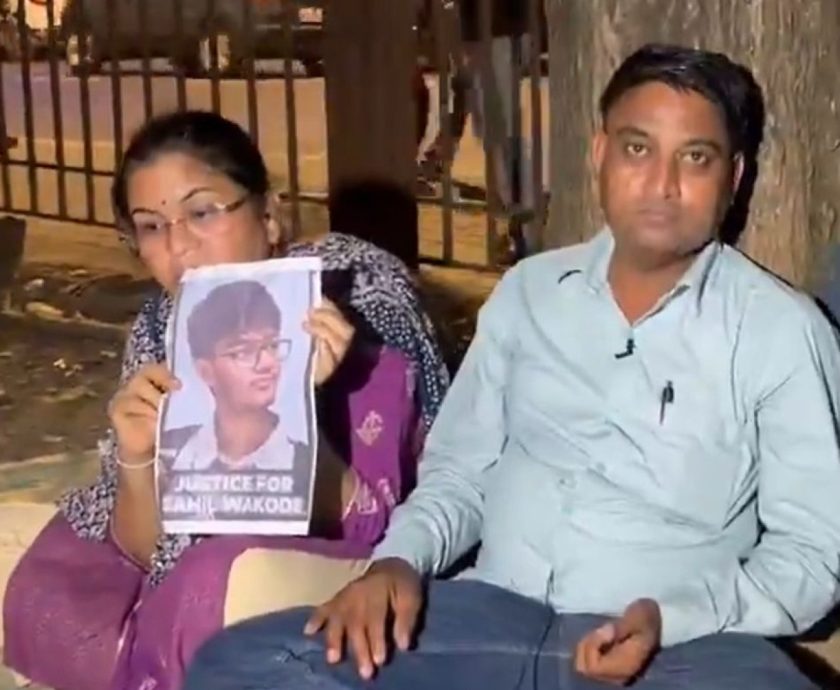
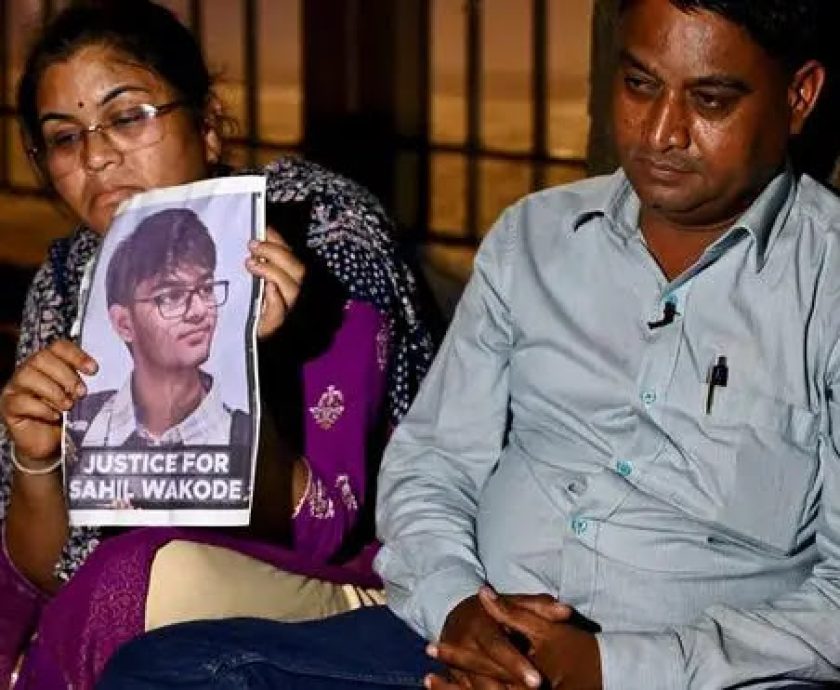
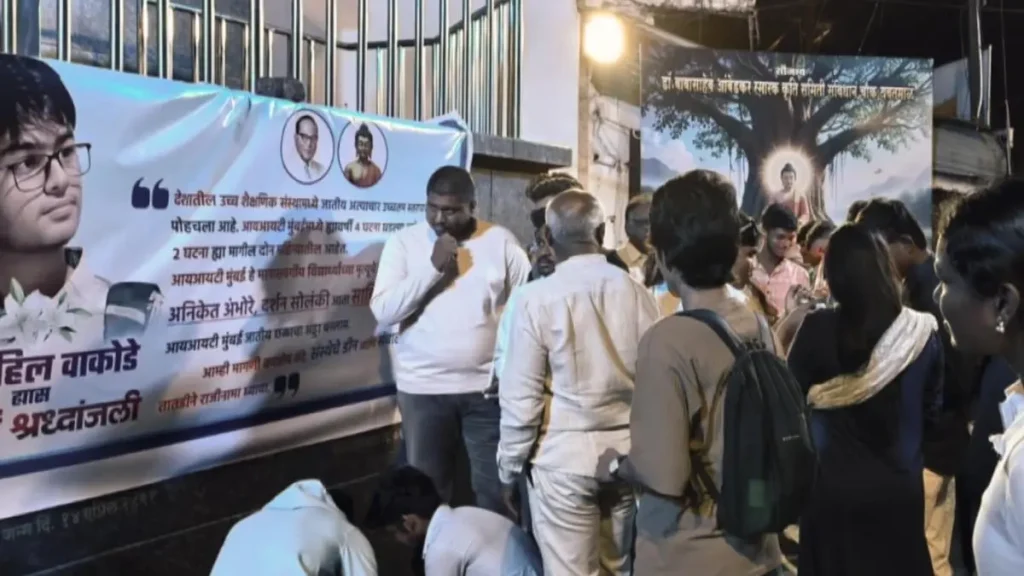
Sahil Wakode’s parents Ravindra Wakode (right) and Sonali Wakode, on a protest at Azad Maidan demanding justice, in Mumbai on September 24. | Photo Credit: ANI
Former UGC Chairman Sukhdev Thorat said, “The survey of the SC/ST Cell was enough to portray the reality of discrimination. Trying to hide it behind misbehaviour or failure of the student won’t solve this issue. The suicides [of SC students] are the cumulative effect of the discrimination students have faced for a longer period. Only a strict law against caste discrimination at educational institutes with a criminal charge would prevent these tragic incidents.”
APPSC realised that to prevent discrimination, IIT-B needed to design an anti caste discrimination course for all students on the lines of the Vishakha Committee’s gender sensitisation programme.
To help the administration, APPSC took an initiative in this direction. “But after some time we realised that the administration was not proactively pushing it. Even today, after constantly pursuing the need for the course since 2021, the course is yet to be established,” said Akshay Sawant, an APPSC member. Meanwhile, the cell tried to establish it by bringing various experts on board but the course is yet to be implemented.
The discrimination has not stopped with SC/ST students. Akshay Sawant’s story is an example. Akshay, who does not belong to the SC/ST community, was proactive in APPSC all through his years in IIT-B. In 2025, IIT-B suspended his PhD admission in the Social Sciences and Humanities Department. Akshay reportedly had given a statement to a local newspaper which the IIT-B disciplinary committee felt was unnecessary. Despite Akshay clarifying to committee that the media outlet did not take his consent before writing, the suspension decision was taken.
In July 2025, the Bombay High Court revoked this suspension saying that Akshay’s statement was his personal opinion. But APPSC later said that action was taken against Akshay because he was active in APPSC and over the period, he had serious differences with the IIT administration over many issues related to SC/ST students. Akshay was allowed to pursue a PhD in August 2026.
Caste on the campuses of India’s premier educational institutions has been a much-discussed topic for years. Efforts have been made to safeguard SC/ST students from caste discrimination. But these efforts have not changed the reality on campus. As Thorat said: “There is caste in society and that gets reflected in the campuses. It is a problem with a moral dimension too.”